


-
Academic Article
User Achievement | PNAS: Coherent Raman Advances Multiscale Investigation of the Soft-Hard Interface in the Human Knee Joint

Research Topic and Main Findings
The article highlights a PNAS study by teams from Zhejiang University and Liangzhu Laboratory, Tsinghua University, and Shanxi Medical University. The work analyzes multiscale toughening mechanisms at the human meniscus-root-to-bone interface and identifies mineral-phase transformation and distribution as central factors governing the mechanics of the soft-hard interface.
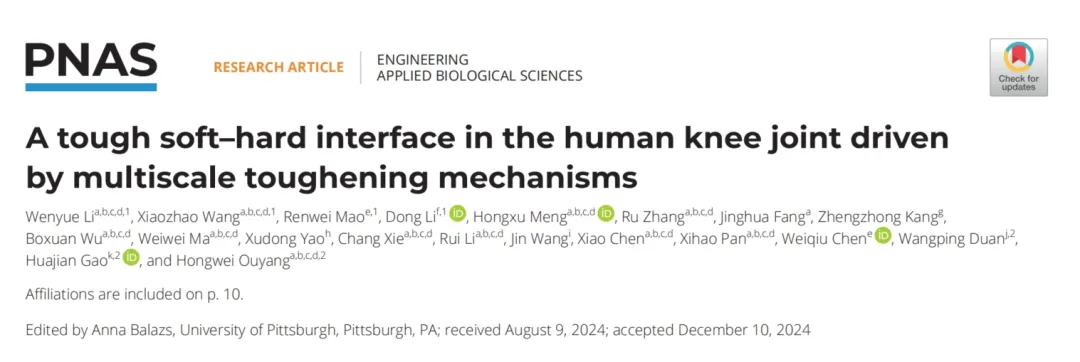
Figure 1: Research outcome
Study Object: The meniscus-root-to-bone interface in the human knee joint.
Contribution of Coherent Raman Imaging
Coherent Raman microscopy was used to trace the gradual maturation of minerals at the interface, from amorphous calcium phosphate (ACP) to hydroxyapatite (HAP). The article explains that SRS imaging not only maps mineral distribution, but also reveals changes in carbonate content and substitution rate through spectroscopic analysis, providing insight into how the interface gains mechanical strength.
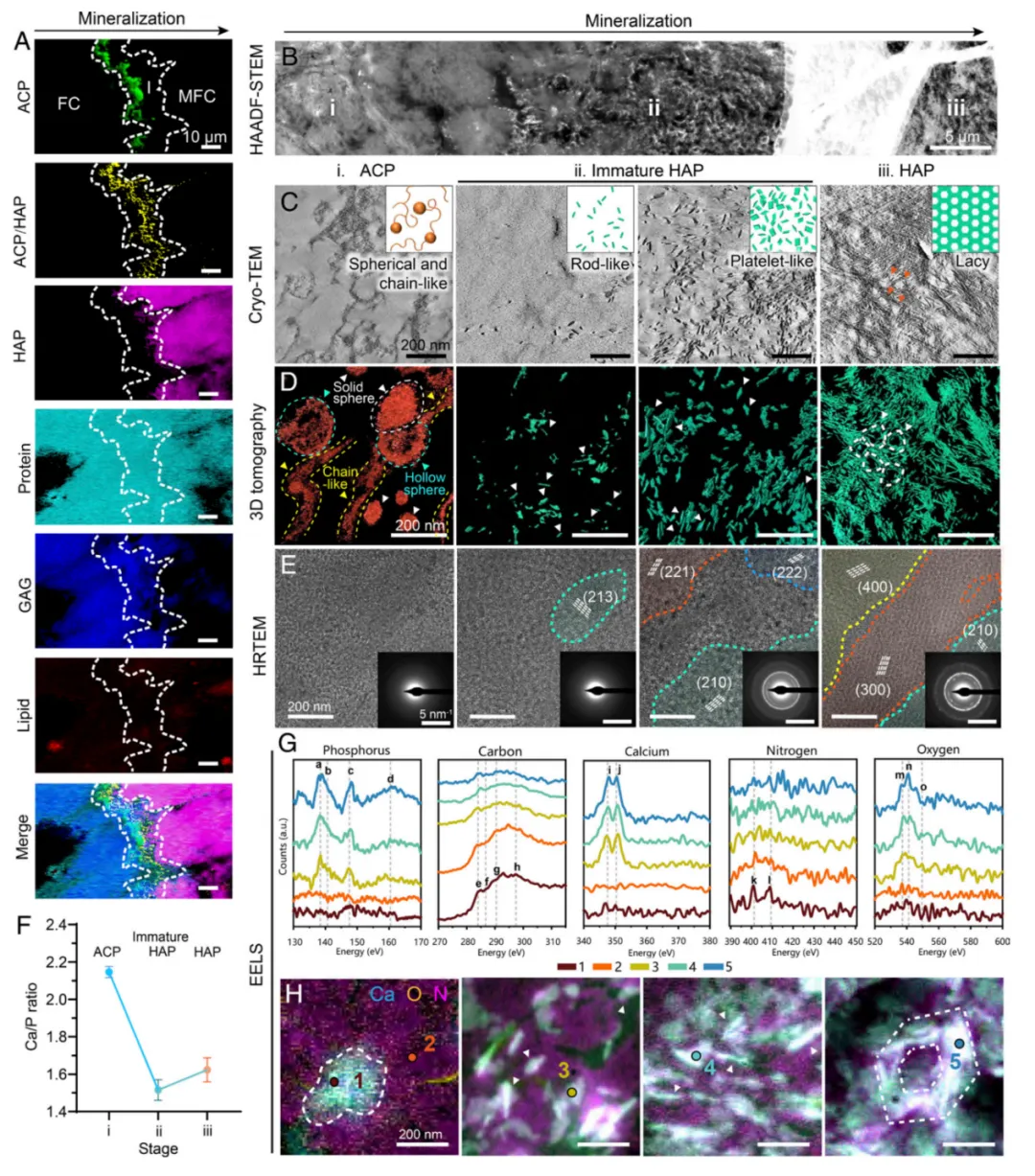
Figure 2: Coherent Raman intensity imaging of mineral-phase transition at the meniscus- root-to-bone interface; scale bar: 1 um
Technical Value: High spatial resolution and high spectral resolution give SRS an advantage over traditional imaging methods in this context.
Key Conclusion: The conversion from ACP to HAP is gradual rather than abrupt.
Significance and Author Information
The article concludes that SRS, when combined with mechanical testing and molecular-dynamics simulation, reveals the multiscale strengthening mechanisms of the interface and provides a theoretical basis for designing high-performance biomaterials. Wenyue Li, Xiaozhao Wang, Renwei Mao, and Dong Li are listed as co-first authors, and Hongwei Ouyang, Huajian Gao, and Wangping Duan are among the co-corresponding authors.
Popular Tags
-
Coherent Raman
Recommendation
-
-
Academic Article
2026-02-09User Achievement | The Guizhou University Team Uses Stimulated Raman Imaging to Decipher the Efficiency-Boosting Mechanism of Enzyme Catalysis -
-
-
Academic Article
2026-01-22User Achievement | A New Breakthrough from the Peking University Team: Coherent Raman Reveals the Molecular Basis of Light-Regulated Hypocotyl Elongation -