


-
Academic Article
User Achievement | The Guizhou University Team Uses Stimulated Raman Imaging to Decipher the Efficiency-Boosting Mechanism of Enzyme Catalysis

Research Background
The article addresses the long-standing challenge of verifying the channeling-like effect in enzyme-cascade reactions. Efficient UDP-GlcNAc synthesis has been constrained by enzyme instability, intermediate diffusion, and limited observation tools. Conventional methods either rely on fluorescence labeling that perturbs the catalytic system, or fail to combine nanoscale spatial resolution, millisecond- scale temporal resolution, and non-invasive chemical specificity.
1. Spatial Bottleneck: Conventional methods cannot clearly resolve intermediate transfer pathways at the hundred-nanometer interface scale.
2. Temporal Bottleneck: Millisecond-scale dynamics are difficult to capture in real time.
3. Chemical Bottleneck: Labeling disturbs the reaction, while many label-free methods lack sufficient sensitivity.
Study Results and SRS Evidence
In Green Chemistry, the team led by Libo Zhang at Guizhou University reported that Vibronix's UltraView platform, equipped with hyperspectral stimulated Raman scattering imaging, enabled the first three-dimensional, dynamic, label-free visualization of the GlcNAc-1-P intermediate on the surface of a Ni-ZIF-8 dual-enzyme nanoreactor. The work directly observed rapid confinement and conversion of the intermediate at the interface, providing in situ evidence for the proposed channeling-like effect.
Mechanistic Outcome: The imaging data helped explain the 4.4-fold catalytic-efficiency increase and the 92 percent conversion achieved within 30 minutes.
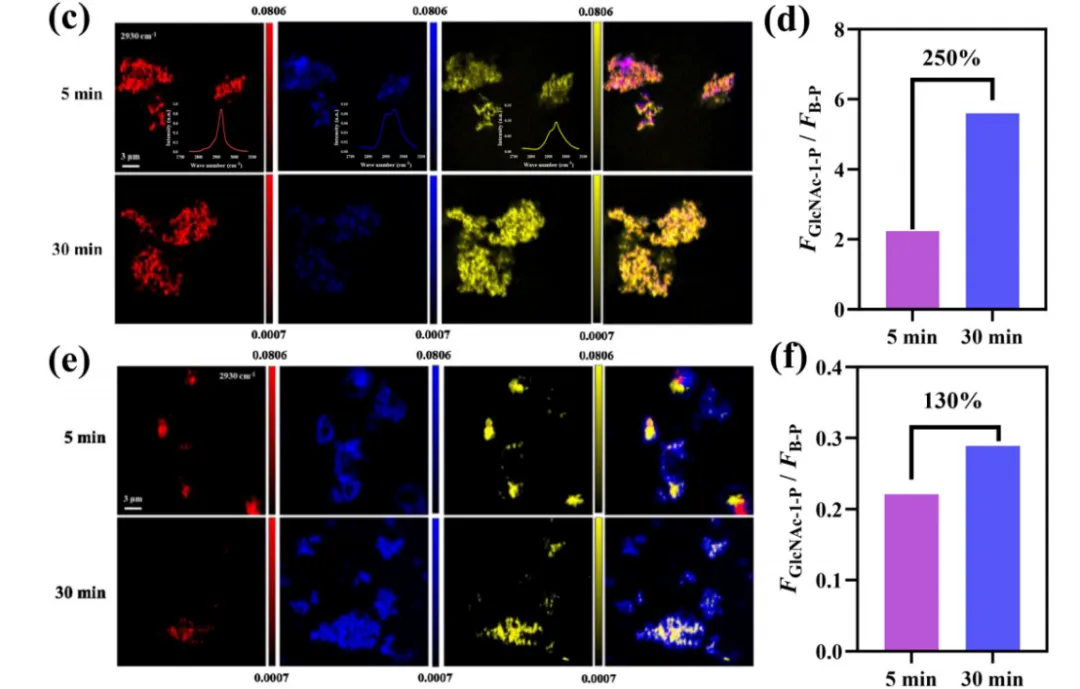
Figure 1 directly visualizes the rapid confinement and conversion of GlcNAc-1-P on the nanoreactor surface.
Technical Value: The work demonstrates label-free in situ observation, precise spatial localization, dynamic tracking, and multimodal quantitative analysis.
UltraView Advantages and Broader Applications
The article emphasizes that UltraView enabled high-fidelity in situ detection of intermediates on an approximately 100 nm reactor surface. It also positions the platform for broader use in cell- metabolism studies, drug-delivery monitoring, clinical pathology analysis, and environmental or microplastic detection workflows.
1. Label-Free In Situ Observation: Uses the characteristic Raman shift of GlcNAc-1-P to visualize the true reaction state.
2. Single-Particle Detection: Locates individual nanoreactors and detects low-abundance transient intermediates.
3. Dynamic Tracking: Compares intermediate behavior under single-enzyme and dual-enzyme conditions in real time.
4. Platform Expansion: Extends to synthetic biology, biocatalysis, drug research, and materials science.
Reference and Article Navigation
The article cites the Green Chemistry paper by Youbo Yu and colleagues, "Spatial organization of an enzyme cascade in a Ni-ZIF-8 framework for efficient sugar nucleotide synthesis."
Popular Tags
-
Coherent Raman
Recommendation
-
-
Academic Article
2026-02-09User Achievement | The Guizhou University Team Uses Stimulated Raman Imaging to Decipher the Efficiency-Boosting Mechanism of Enzyme Catalysis -
-
-
Academic Article
2026-01-22User Achievement | A New Breakthrough from the Peking University Team: Coherent Raman Reveals the Molecular Basis of Light-Regulated Hypocotyl Elongation -